
Upskilling in Sustainability: A Smart Move for your Career
Why Sustainability Skills Matter More Than Ever
In the UK, the demand for sustainability professionals is skyrocketing. With the UK government’s commitment to net-zero carbon emissions by 2050, businesses across all sectors are under pressure to adopt sustainable practices. This shift creates a wealth of opportunities for those with the right skills.
At Wylde we are seeing this first hand with companies either recruiting and training sustainability managers from outside their organisation, or upskilling their internal teams and promoting from within.
However businesses approach this, the demand is increasing for qualified and skilled sustainability professionals.
The Growing Market for Sustainability Professionals
- Increased Job Openings: The sustainability job market in the UK is booming. Recent reports suggest a 12% annual growth in sustainability-related job postings, with significant demand in consultancy, corporate roles, and non-profit sectors.
- Competitive Salaries: Sustainability roles in the UK offer attractive salaries. Entry-level positions can start at around £25,000, with experienced professionals earning upwards of £60,000. Leadership roles in sustainability can command salaries well into six figures.
- Diverse Opportunities: Career paths in sustainability are varied and exciting. You might find yourself working on renewable energy projects, developing corporate sustainability strategies, or managing environmental impact assessments.
Skills Shortages and Opportunities
- Technical Knowledge Gap: There is a notable shortage of professionals with advanced technical skills in environmental management, sustainability reporting, and renewable energy technologies. Upskilling in these areas can significantly boost your career prospects.
- Regulatory Expertise: Understanding the complex landscape of environmental regulations is critical. Legislation is increasing which means that businesses will need to be able to access expertise in order to remain compliant. Professionals who can navigate and ensure compliance with UK and international laws are going to be in high demand.
- Strategic and Analytical Skills: Companies need individuals who can not only understand sustainability issues but also strategically address them. Skills in data analysis, strategic planning, and stakeholder engagement are highly valued.
Return on Investment for Upskilling
For managers in Environmental, Quality, and H&S roles, as well as new graduates, the return on investment (ROI) for upskilling in sustainability is substantial:
- Career Advancement: Gaining sustainability credentials can lead to promotions and leadership opportunities. Certifications such as the IEMA Certification in Environmental Management (PIEMA) are particularly valued. This is a recognised and highly respected practitioner level qualification.
- Job Security: As sustainability becomes integral to business strategy, those with expertise in this area will be indispensable, ensuring long-term job security.
- Personal Fulfilment: Beyond financial and career benefits, working in sustainability offers the satisfaction of contributing to a cause that benefits society and the environment.
At Wylde, we have recruited and trained sustainability consultants within our in-house team as well as training our clients’ employees. We’ve seen firsthand the transformative power of upskilling. Whether you’re a seasoned manager or a recent graduate, investing in sustainability education can open doors you never imagined.
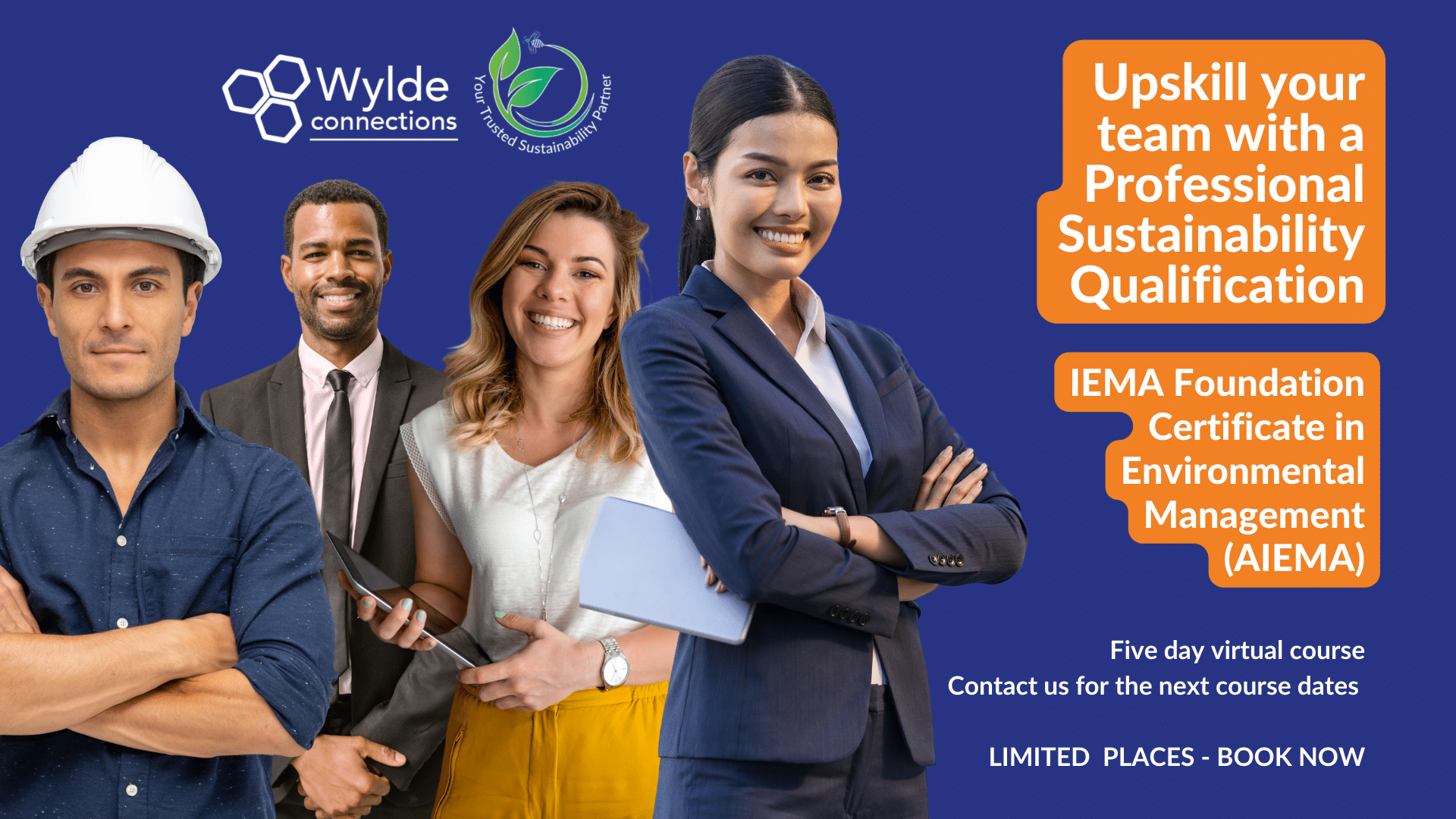
How Wylde Connections Can Help You Upskill and Retrain
At Wylde Connections, we specialise in helping individuals upskill and retrain in sustainability, providing them with the tools and knowledge to excel in this rapidly growing field.
We are an accredited IEMA training provider offering courses such as the IEMA Certification in Environmental Management (PIEMA), which are designed to equip you with practical skills and theoretical knowledge essential for advancing your career. We offer a blend of online and hybrid learning experiences, making our training accessible and flexible to fit around your existing commitments.
Gaining a PIEMA qualification through Wylde Connections involves a structured learning process. The course covers comprehensive modules on environmental management principles, sustainability strategies, and regulatory compliance. Our expert trainers guide you through each step, providing support and real-world insights. By enrolling in our PIEMA course, you’ll benefit from interactive sessions, case studies, and networking opportunities with industry professionals, ensuring you’re well-prepared to tackle environmental challenges and drive sustainable change within your organisation.
Beyond the immediate career benefits, this investment positions you at the forefront of an essential and evolving field, empowering you to lead transformative initiatives that make a tangible difference. By equipping yourself with the latest sustainability knowledge and skills, you’re not only investing in your future but also contributing to a more sustainable and resilient world.
Statistics on Employment and Talent Trends in ESG and Sustainability in the UK
- Employment Growth: The Office for National Statistics (ONS) highlights that the sustainability sector in the UK is experiencing substantial growth, with job postings related to ESG and sustainability increasing by 12% annually (Office for National Statistics) (PwC).
- Investor Confidence: A report from PwC indicates that 82% of institutional investors believe ESG should be integral to a company’s strategy, and 66% feel more reassured when a C-suite executive is responsible for ESG concerns (PwC) (KEY ESG).
- Skills Shortage: Despite the growing demand, 37% of market issuers and institutional investors worldwide report a lack of skilled professionals in the ESG space, highlighting a significant opportunity for those looking to upskill in this area (KEY ESG).
By addressing these trends and equipping yourself with the necessary skills through Wylde Connections, you can not only meet the current market demand but also position yourself as a leader in sustainability and ESG initiatives.