ISO 14001:2026 is here: What the changes mean for your business
01/07/2026
ISO 14001:2026 — the first major revision to the world’s leading Environmental Management System standard in over a decade — was published on 15 April 2026. More than 670,000 organisations worldwide hold ISO 14001 certification. If your business is one of them, or working towards it, the changes are significant. The three-year transition window to April 2029 is already open, and it is tighter than it looks.

ISO 14001 is the internationally recognised standard for Environmental Management Systems (EMS). Published by the International Organisation for Standardisation (ISO), it provides a framework for organisations of all sizes to identify, manage and continually reduce their environmental impact. The 2026 edition does not replace the fundamental structure of the standard, but it raises the bar in several areas that reflect how the environmental and regulatory landscape has shifted since 2015.
What has changed in ISO 14001:2026?
The core structure of ISO 14001 remains in place, and no existing requirements have been removed. What the 2026 edition does is sharpen the standard to reflect a world where environmental performance is judged on results, not intentions. The key areas of change are:
Environmental conditions are now mandatory context
Climate change, biodiversity loss, pollution levels and ecosystem health must now be explicitly addressed as part of your organisational context. This means your EMS must demonstrate how these external environmental conditions are identified, assessed and managed as both risks and opportunities — not treated as background considerations.
Lifecycle thinking moves from recommended to required
The 2015 version encouraged a lifecycle perspective. The 2026 edition makes it a core expectation. Your EMS scope must now reflect the environmental impacts of upstream and downstream activities, from material sourcing and product design through to use, repair and end-of-life treatment. For many organisations, this requires a significant rethink of how the EMS boundary is defined.
Leadership accountability is strengthened
Top management is expected to actively drive environmental performance, not simply oversee it. The revised standard places greater accountability at board and director level, which means environmental performance must be embedded in how senior leaders make decisions, not delegated entirely to an EMS manager.
A new change management clause (6.3)
Organisations must now demonstrate a systematic approach to managing changes that could affect the EMS. This includes planned changes such as new production processes, changes in suppliers, or shifts in regulatory requirements.
Data-driven decision making and digital solutions
The 2026 edition formally acknowledges the role of digital tools — including real-time monitoring, environmental analytics and data management systems — in enhancing environmental performance. Organisations are expected to make greater use of data in evaluating and improving their EMS outcomes.
What does ISO 14001:2026 mean for your supply chain?
This is the area that will require the most work for many organisations. One of the most significant shifts in the 2026 revision is the broadening of operational control under Clause 8 to include the entire value chain.
Under the 2015 edition, organisations were required to manage ‘outsourced processes.’ The 2026 standard replaces that with a substantially wider scope. Organisations must now actively manage environmental risks, opportunities and impacts associated with all externally provided processes, products and services — not just their own operations.
In practical terms:
- Procurement practices must reflect environmental performance criteria
- Supplier evaluation must include environmental risk assessment
- Ongoing supplier monitoring must go beyond an annual questionnaire
- You need documented visibility not just of your direct (Tier 1) suppliers but through to the raw materials and processes behind them
This demands structured data, clear processes and a level of supplier engagement that most businesses will need to build from scratch or significantly strengthen.
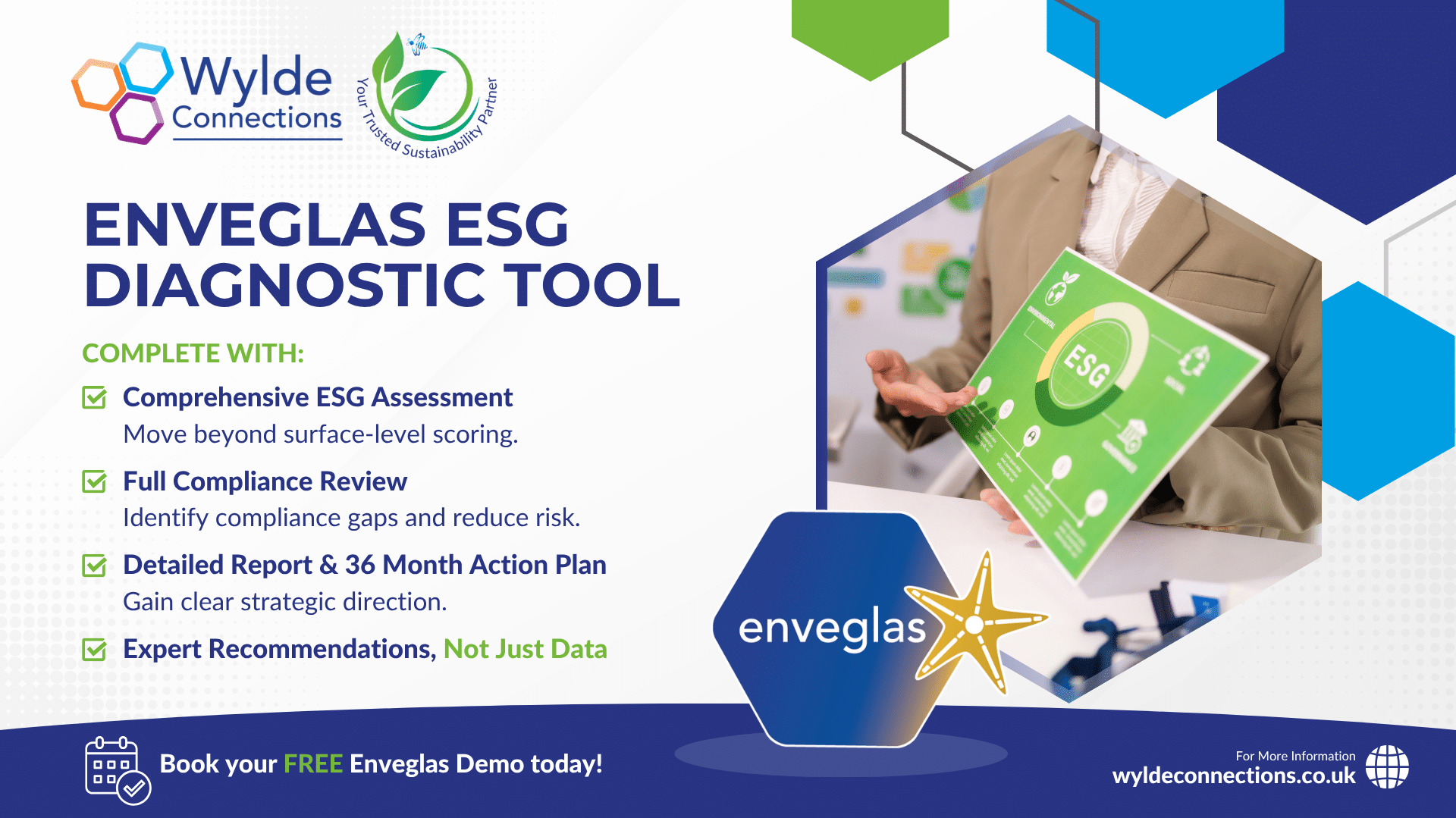
Tools like the Enveglas ESG Diagnostic can be deployed across a supply chain to give businesses structured, comparable ESG data from their suppliers. Enveglas identifies gaps, highlights risk and provides a clear baseline from which to drive improvement. For corporates managing complex supply chains, it provides the mechanism to gather the data the revised standard now demands. For SME suppliers, it provides a practical and supported way to evidence their ESG credentials. Alongside Enveglas, Wylde Connections’ value chain mapping workshops and strategic ESG supply chain support help organisations build the visibility, processes and supplier relationships they need to meet these new requirements.
Why does starting your ISO 14001:2026 transition early give you a competitive edge?
Organisations certified to the 2015 version have until April 2029 to complete their transition. Three years may sound comfortable, but factoring in gap analysis, system updates, staff training, supplier engagement and at least one internal audit cycle before your certification audit, the window is considerably tighter than it appears.
Businesses that start early will gain a real advantage for several reasons.
First, the 2026 changes align ISO 14001 much more closely with the broader ESG and sustainability reporting landscape. The emphasis on lifecycle thinking, supply chain responsibility, climate risk and biodiversity loss mirrors what businesses are already being asked to evidence through frameworks such as the Corporate Sustainability Reporting Directive (CSRD), Streamlined Energy and Carbon Reporting (SECR) and Scope 3 emissions reporting. By transitioning now, you are not just preparing for a certification audit — you are building the evidence base, data infrastructure and supplier relationships that strengthen your risk management and position you ahead of competitors.
Second, ISO 14001 certification is increasingly referenced in tender requirements and procurement frameworks. Getting your EMS aligned with the 2026 standard now makes every other sustainability obligation easier to meet, and makes your business a more credible partner for customers and clients who are themselves under pressure to demonstrate environmental performance across their supply chains.
What should you do now to prepare for ISO 14001:2026?
The starting point is a gap analysis: a structured review of your current EMS against the 2026 requirements to identify where updates are needed. For most organisations, the biggest areas of work will be:
- Supply chain oversight — reviewing procurement practices, supplier evaluation criteria and ongoing monitoring processes
- Lifecycle considerations — redefining EMS scope to explicitly cover upstream and downstream impacts
- Environmental conditions — ensuring climate change, biodiversity and pollution risks are explicitly addressed in your context analysis and planning
- Change management — putting in place a documented process (Clause 6.3) for managing EMS-relevant changes
- Staff training — the revised standard expects greater engagement from all levels of the organisation, and your internal auditors will need to understand new expectations around audit objectives, change management and performance evaluation
Starting with a gap analysis gives you a clear picture of the work involved, helps you plan resources and timelines, and puts you in a much stronger position ahead of your certification body’s assessment.
How can Wylde Connections support your ISO 14001:2026 transition?
Wylde Connections has deep expertise in supporting businesses around ISO 14001, from technical training and compliance auditing through to the broader consultancy that makes environmental management a genuine driver of business performance.
Beyond Compliance ISO 14001 Technical Training
A hands-on, one-day in-house workshop designed for internal EMS leads, auditors, sustainability professionals and operational teams. The session covers practical tools to move beyond tick-box auditing, stronger alignment between your EMS and ESG goals, greater staff ownership of environmental responsibilities, and a clearer understanding of legal duties and risks. Earlier this year, Wylde delivered this training to TDP Ltd, a Derbyshire-based manufacturer of outdoor furniture made from recycled plastic and a King’s Award winner for Sustainable Development. As TDP’s Commercial Director Kym Barlow said: “The training was really insightful. James made the content very engaging, and the team is now far better informed to manage impacts and embed best practice.”
Compliance auditing
For businesses that need an independent assessment of their environmental management systems, Wylde provides in-depth compliance auditing. A recent audit for Haldex Brake Products — the Warwickshire-based UK arm of a global leader in braking systems and air suspension for heavy commercial vehicles — included a full site tour, interviews with key personnel, a thorough documentation review, and a detailed report with clear recommendations. Peter Sammon at Haldex said: “I was very impressed with Wylde’s work. The auditor really knew his stuff and understands what compliance means in the real world. The standard of the report was excellent and gave us all the information we needed to comply with legislation and drive continuous improvement. Wylde demonstrated professionalism at every level, and I wouldn’t hesitate to recommend them to any business needing auditing support.”
Gap analysis, ESG reporting and supply chain support
Wylde’s wider consultancy services support your transition through gap analysis, ESG reporting, carbon reporting, sustainability strategy development and supply chain support. The Enveglas ESG Diagnostic Tool provides the structured baseline assessment that identifies gaps and priorities, whether for your own organisation or across your supplier base.
Ready to start your ISO 14001:2026 transition?
Get the support you need to transition confidently and on time.
→ Try the FREE Enveglas ESG Progress Checker
→ Call us on 01926 754061
Frequently Asked Questions about ISO 14001:2026
When do businesses need to transition to ISO 14001:2026?
The transition deadline is April 2029. All ISO 14001:2015 certificates must be updated to the 2026 edition by that date. However, the practical timeline is considerably shorter: gap analysis, EMS updates, staff training, supplier engagement and at least one internal audit cycle need to happen before your certification body’s assessment. Most businesses should expect to begin their transition in 2025 or 2026 to avoid pressure as the deadline approaches.
What is the single biggest change in ISO 14001:2026?
For most organisations, the most significant change is the broadening of operational control under Clause 8 to include the entire value chain. The 2026 edition requires businesses to actively manage environmental risks and impacts associated with all externally provided processes, products and services — not just their own operations. This means your supply chain, procurement practices and supplier monitoring processes must all reflect environmental performance requirements.
Does ISO 14001:2026 require Scope 3 emissions reporting?
ISO 14001 is an Environmental Management System standard and does not mandate Scope 3 GHG (greenhouse gas) reporting specifically. However, the expanded lifecycle and value chain requirements in the 2026 edition mean businesses must assess and manage the environmental impacts of upstream and downstream activities, which substantially overlaps with Scope 3 considerations. Businesses that also need to report under SECR (Streamlined Energy and Carbon Reporting) or CSRD (Corporate Sustainability Reporting Directive) will find that ISO 14001:2026 transition work supports those obligations directly.
Can SMEs achieve ISO 14001 certification under the 2026 standard?
Yes. ISO 14001 is designed to be applicable to organisations of all sizes. The standard is scalable, and the requirements can be met proportionately depending on the nature, scale and environmental impact of the business. For SMEs that are being asked to evidence environmental credentials by customers or for tender purposes, ISO 14001 certification provides a recognised and credible framework. The 2026 updates do not change this — they raise the bar on supply chain oversight and data quality, which SMEs can address progressively.
How does ISO 14001:2026 relate to other ESG frameworks such as CSRD and SECR?
The 2026 revision brings ISO 14001 into much closer alignment with other ESG and sustainability reporting frameworks. The emphasis on lifecycle thinking, supply chain responsibility, climate risk and biodiversity mirrors the data and evidence requirements under CSRD and SECR. Businesses working towards ISO 14001:2026 certification will be building much of the evidence base — structured environmental data, supply chain assessments, performance monitoring — that these other frameworks also demand. Transition work done now reduces the burden of compliance across multiple obligations.
What is the difference between an EMS gap analysis and a compliance audit?
A gap analysis is an internal or consultant-supported review that compares your current Environmental Management System against the requirements of a new or updated standard — in this case, ISO 14001:2026. It identifies where updates are needed and forms the basis of your transition plan. A compliance audit is an independent, structured assessment of how well your EMS meets its legal and regulatory obligations, and may also assess conformance with the standard itself. Both are valuable: gap analysis to plan your transition; compliance auditing to verify it.